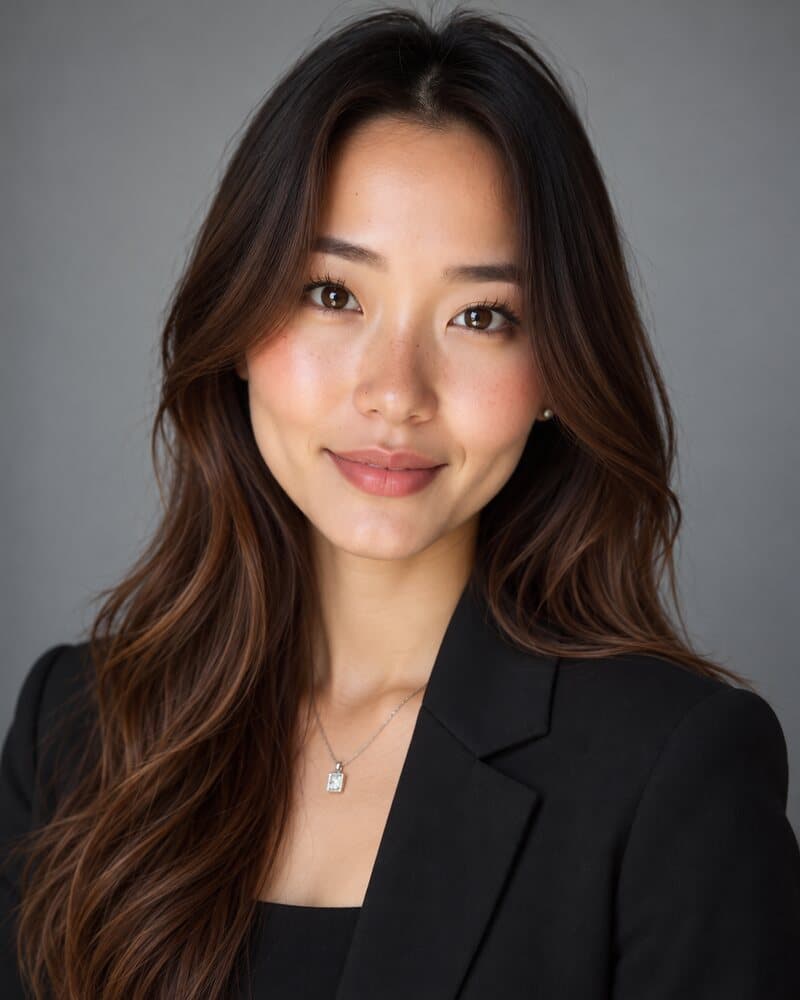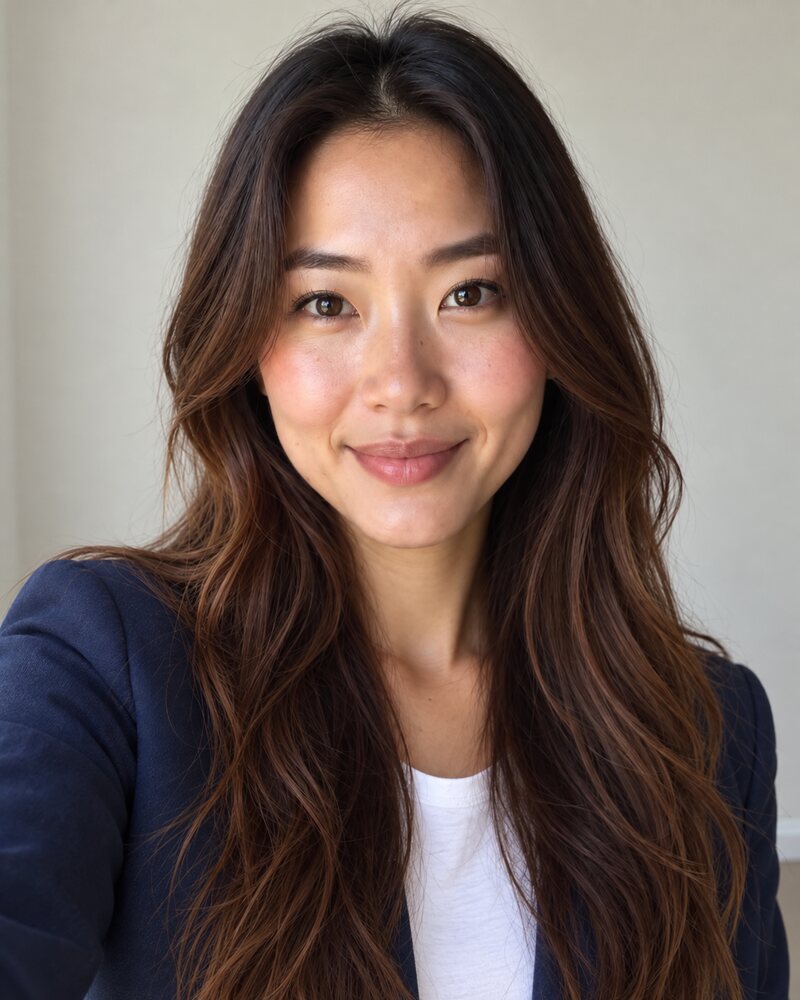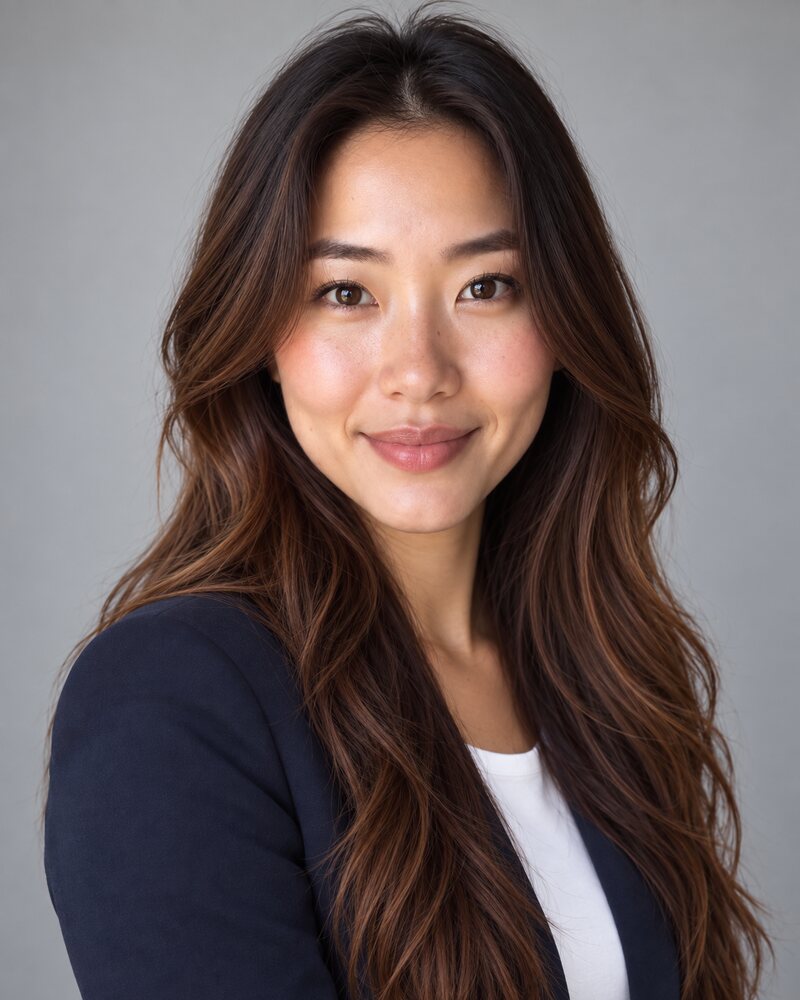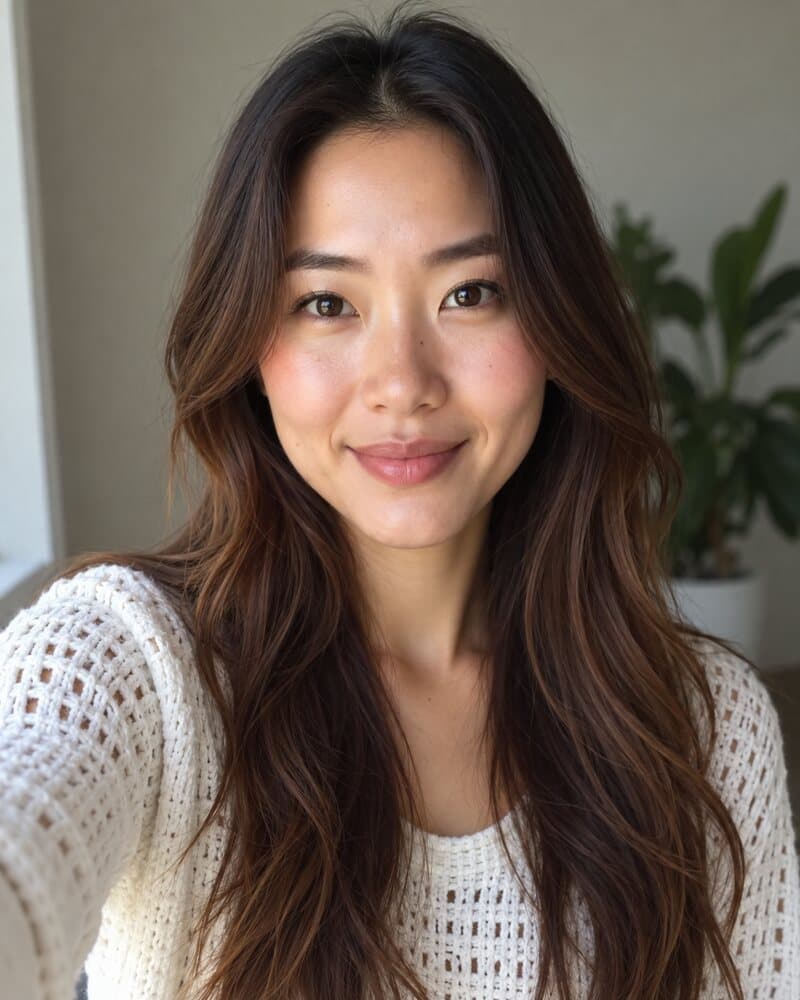
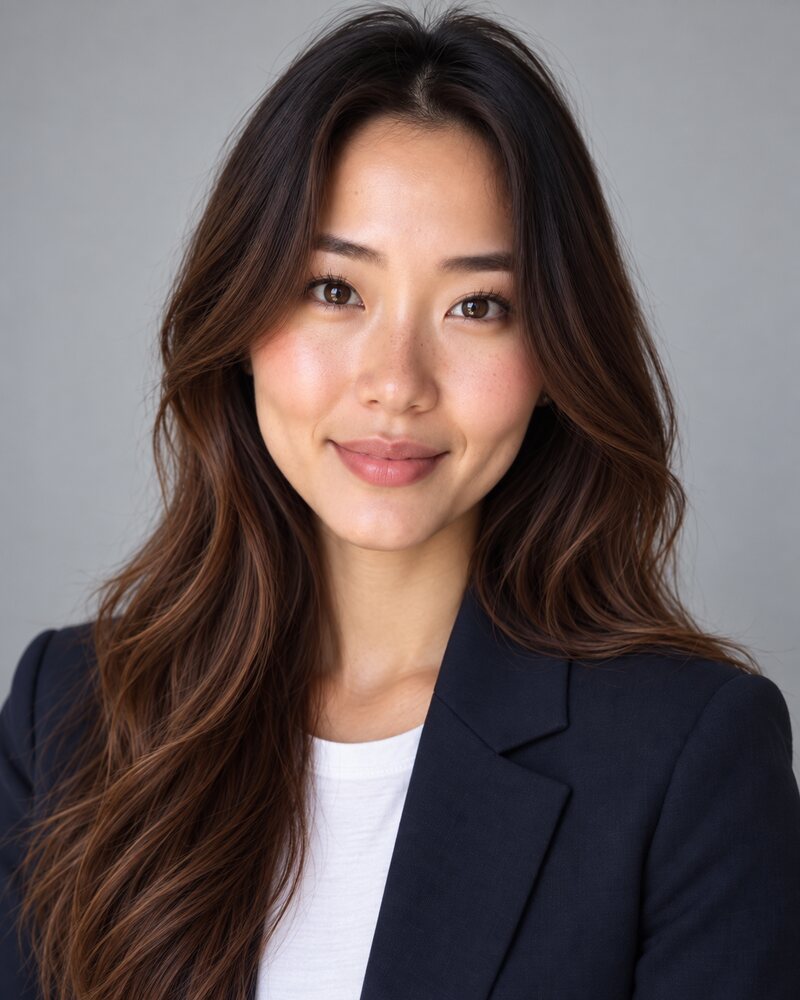
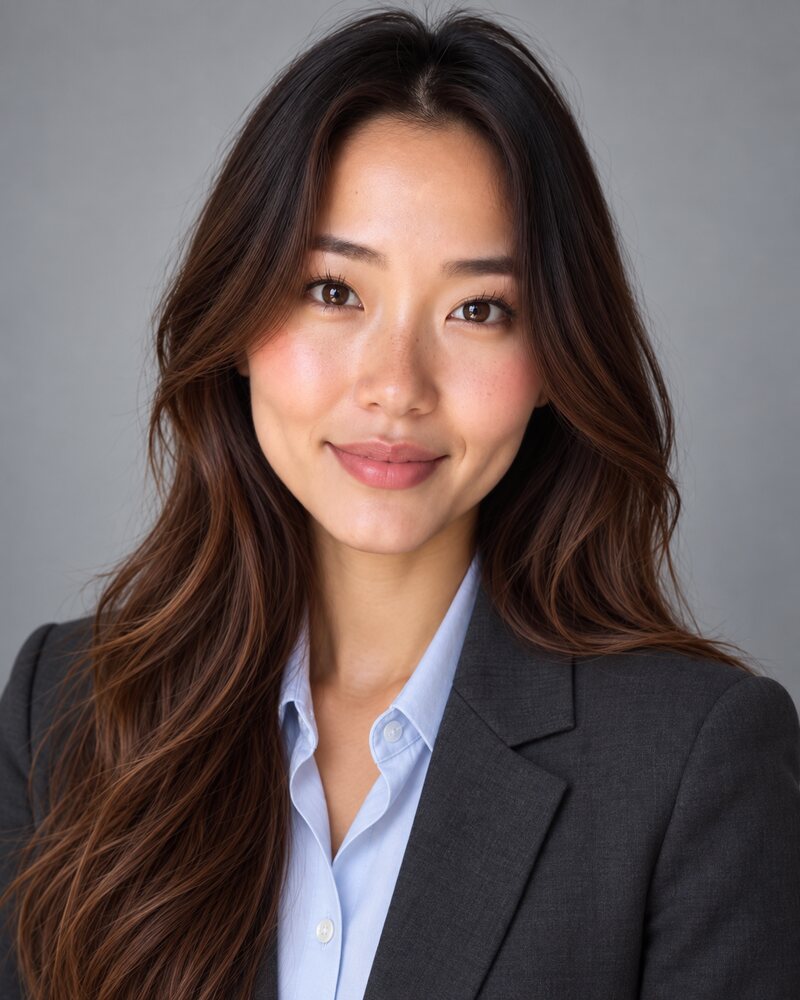
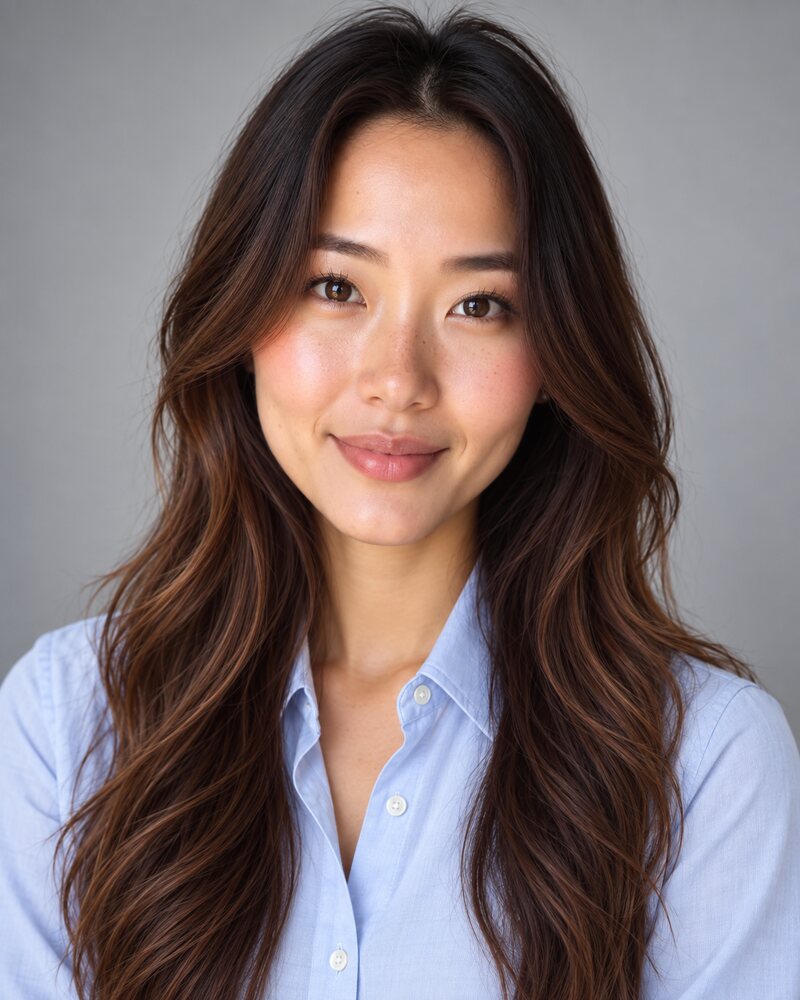
The short version
- Wear a solid colour in a mid-to-deep tone: navy, charcoal, forest green, burgundy or mid blue.
- Make the top contrast with the background. Dark on light or light on dark, not the same tone on both.
- Add a jacket or another structured layer. It sharpens the shoulders and frames the face.
- Skip fine patterns, logos, shiny fabric and anything that does not fit at the shoulders.
- Dress one step smarter than a normal working day in your industry, and no further.
What to wear for a professional headshot
A headshot is cropped at the chest. Trousers, shoes and most of the outfit never appear. What does appear is a colour, a neckline and the line of your shoulders. Get those three right and the rest is detail.
The outfit that works for almost any professional headshot is a solid top in a mid-to-deep colour, a clean neckline or collar, and a jacket that fits at the shoulders. Dress one step smarter than a normal working day and stop there. If you never wear a tie, a tie will look borrowed.
Do
- A solid colour in a mid-to-deep tone
- A collar or a clean, modest neckline
- A jacket or structured layer that fits at the shoulders
- Fabric that is pressed and free of lint
- The smart version of what you wear to work
Don't
- Fine stripes, small checks and busy prints
- Logos, slogans and graphic T-shirts
- A top in the same tone as the background
- Shiny fabric and large, sparkly jewellery
- Something new that you have never worn before
The photo also has to match the person who turns up to the meeting. Wear what you would wear to meet a client, in its best version. For the rest of the preparation, from posing to backgrounds, see the guide to professional headshots.
Best colours to wear, and how they work with the background
Mid-to-deep solid colours are the easiest to photograph. Navy, charcoal, forest green, burgundy, teal and mid blue hold their detail, suit most skin tones and keep attention on the face. The colours that cause trouble sit at the extremes.
- White. It is the brightest thing in the frame, and the eye goes to the brightest thing. A white shirt under a jacket is fine because only a narrow strip shows. A white top on its own against a white wall leaves a face floating in space.
- Black. It hides the shape of lapels and folds, and it merges with dark hair and dark backdrops. Charcoal or navy gives the same formality with more definition.
- Colours close to your skin tone. Beige, tan, blush or brown, depending on your skin, blur the line between neck and clothing.
- Neon and very saturated colours. They bounce their colour onto the underside of your chin and they dominate a small photo.
Match the outfit to the background
Colour is half of a pair. What matters is the gap in tone between your clothes and what is behind you. If the background is fixed, for example a company page with a house style, start there and choose a top a few tones lighter or darker.
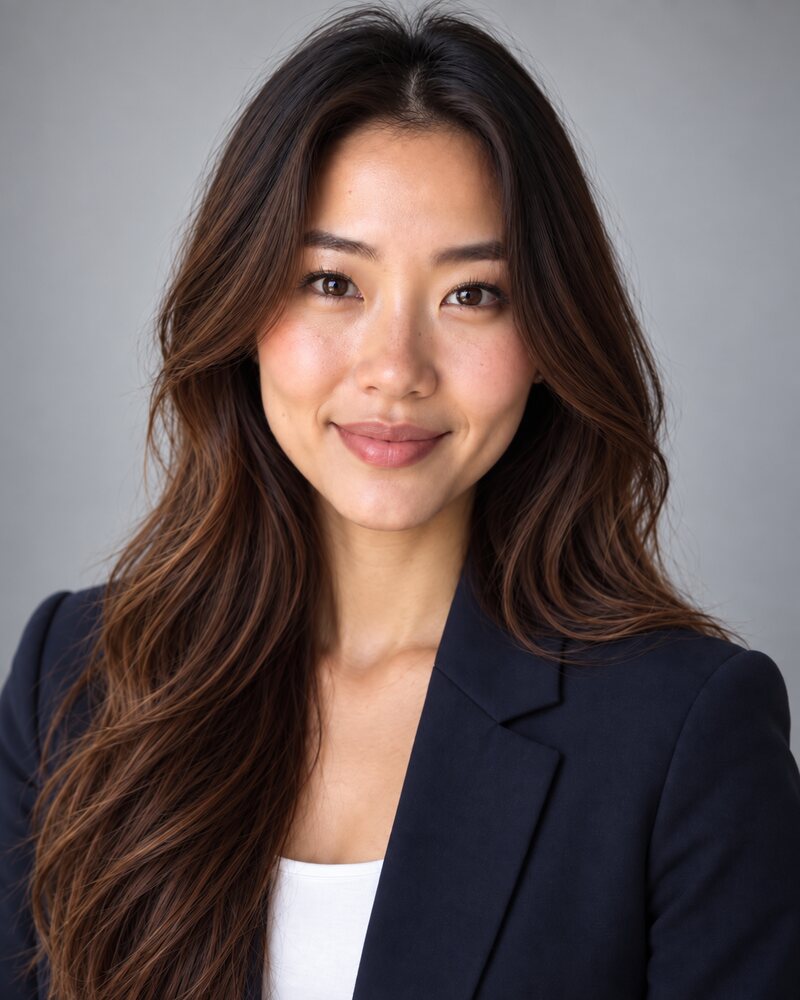
Dark on light grey
A clean outline around the shoulders. The safest pairing.
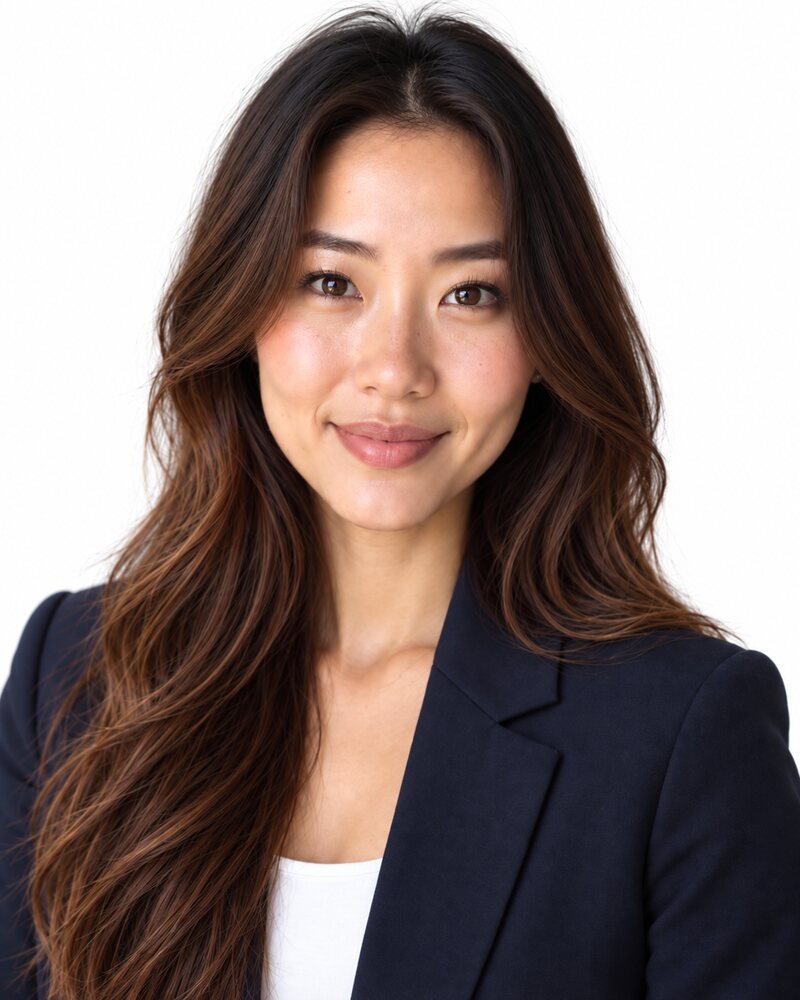
Dark on white
The most contrast. Still readable as a tiny avatar.
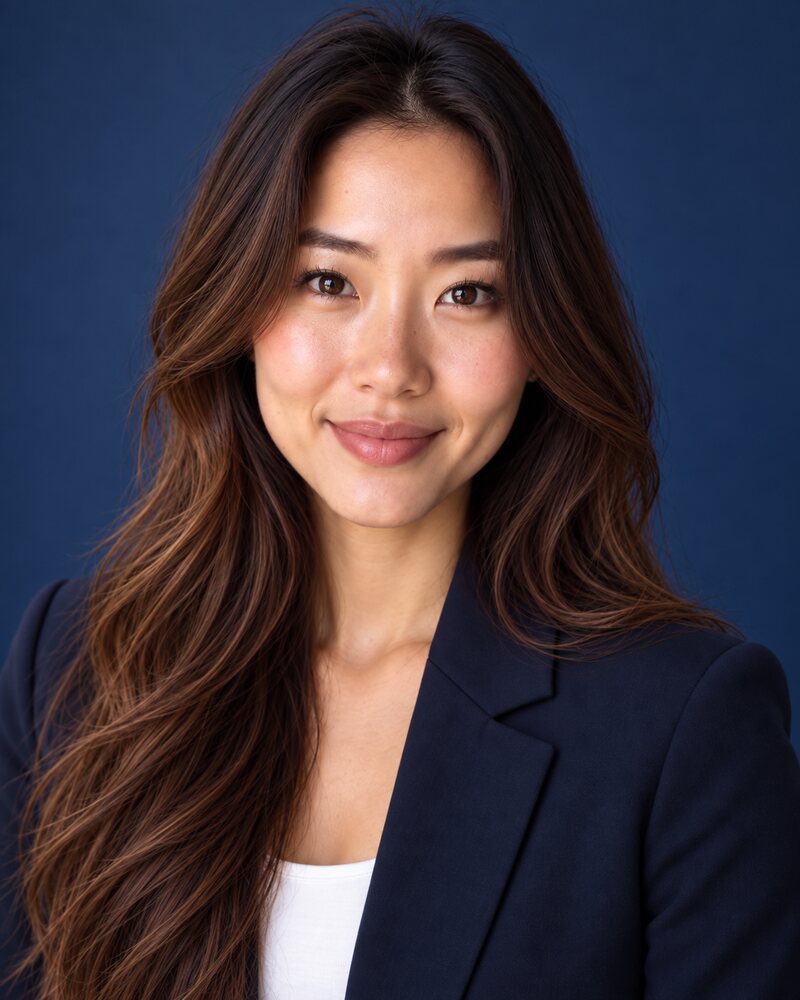
Dark on dark
The jacket merges with the backdrop. Only the white top separates them.
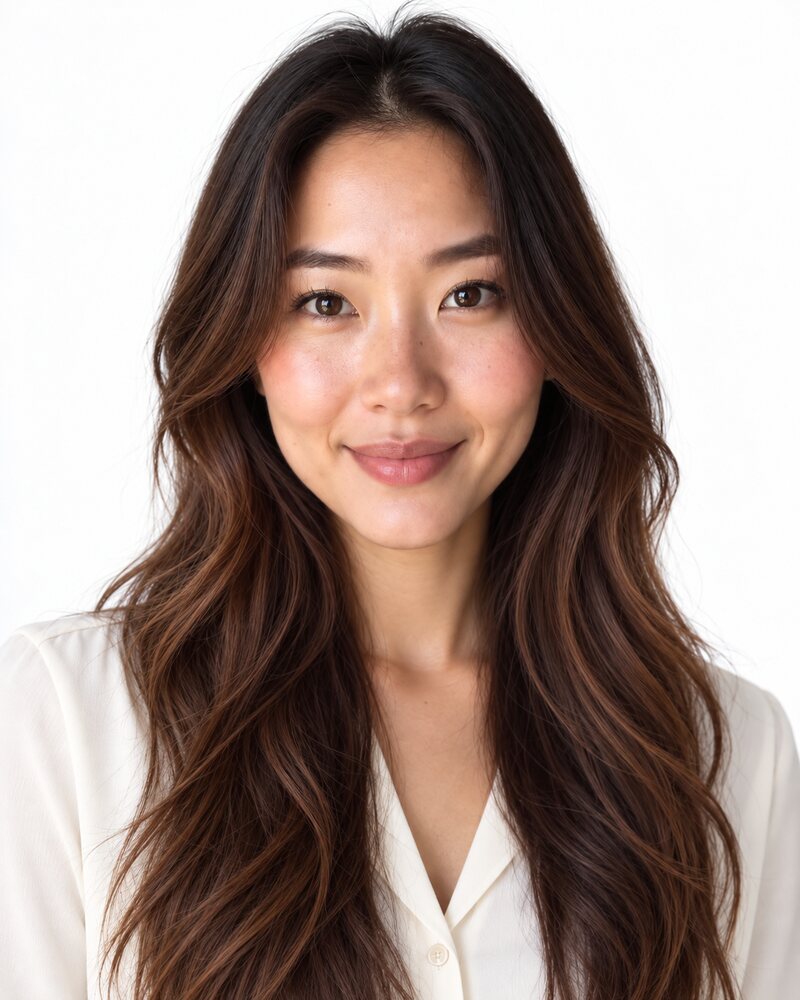
Light on white
Soft and airy, fine on a CV. The shoulders fade at thumbnail size.
None of these is wrong. Dark on dark suits an executive portrait and light on light suits a CV. But if the photo will mostly be seen as a small circle on LinkedIn or Slack, contrast is what keeps it readable. You can compare the same outfit on twelve backdrops on the headshot backgrounds page.
Necklines, collars, fit and layers
Necklines and collars
The neckline is the frame directly under your face. A shirt collar, a crew neck and a modest V-neck all work. A collar adds structure, as long as it sits flat and stays inside the jacket lapels. A V shape, from a V-neck or from the opening of a jacket, lengthens the neck and points up to the face. Very low or very wide necklines can crop to bare skin in a tight frame, so nothing of the outfit shows. High roll necks shorten the neck and can crowd the jaw.
Fit
Fit shows in three places: the shoulder seam, the collar and the chest. The seam should end where your shoulder ends. The collar should touch your neck without pinching. Buttons should close without pulling. Too big is the more common mistake, because loose fabric bunches when you sit or turn. Photographers often clip a loose jacket at the back, out of shot, and a bulldog clip does the same job at home.
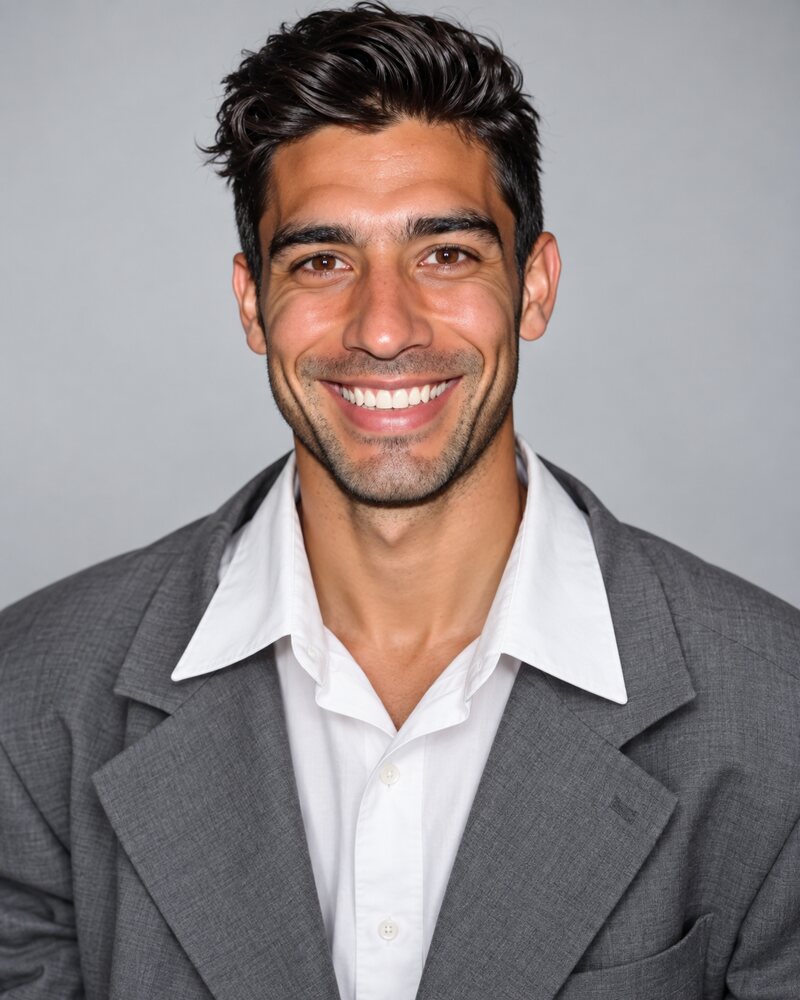 Example to avoid
A size too big
Shoulder seams hang past the shoulder and the collar gapes. It reads as borrowed.
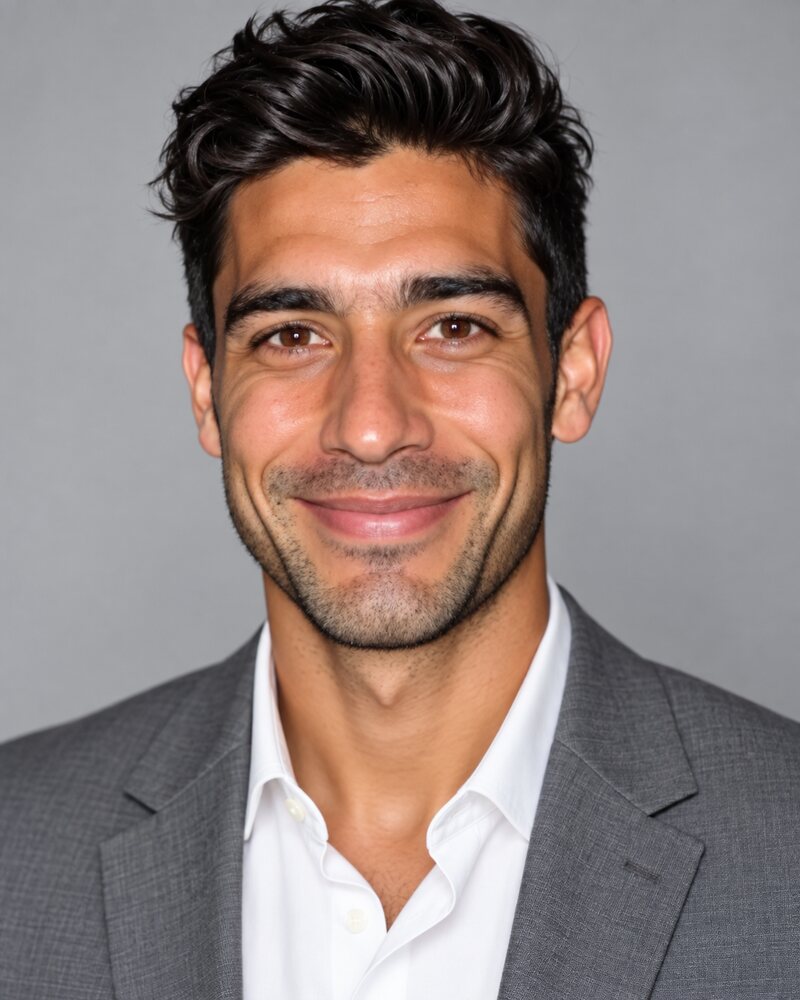 Good example
Fits at the shoulder
Seams end where the shoulder ends. The collar touches the neck without pinching.
Why a jacket helps
A jacket does three jobs. Its shoulders give you a firm outline. Its lapels make a V that leads to the face. And a dark jacket over a lighter top puts contrast right at the neckline, where it helps most. A blazer, a suit jacket, a structured cardigan or a neat overshirt all do this. Compare the open-collar shirt and the charcoal suit at the top of this page: same person, same light, and the layered one looks more finished.
Patterns, logos and fabrics to avoid
Fine repeating patterns are the main risk. Pinstripes, small checks, houndstooth and herringbone can produce moiré, a wavy shimmer that appears when the pattern clashes with the pixel grid of a camera or screen. It often gets worse when the photo is shrunk to avatar size. Large patterns do not shimmer, but they pull the eye away from your face.
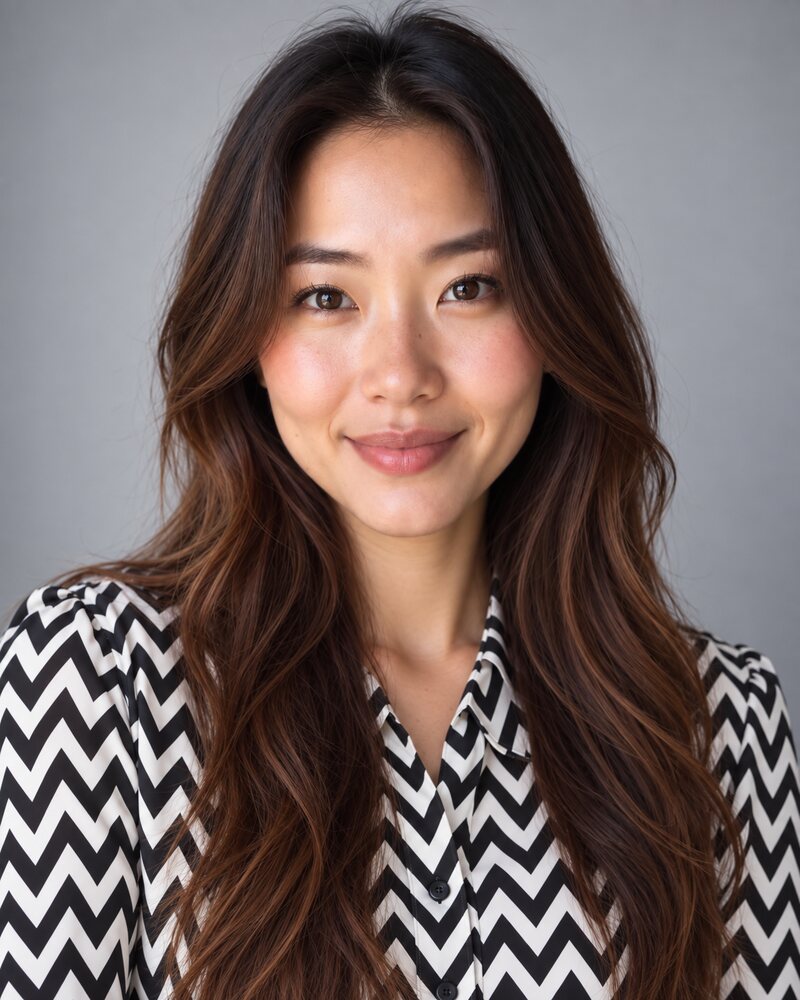 Example to avoid
Busy pattern
The print is the first thing you see. Small repeats can also shimmer on screen.
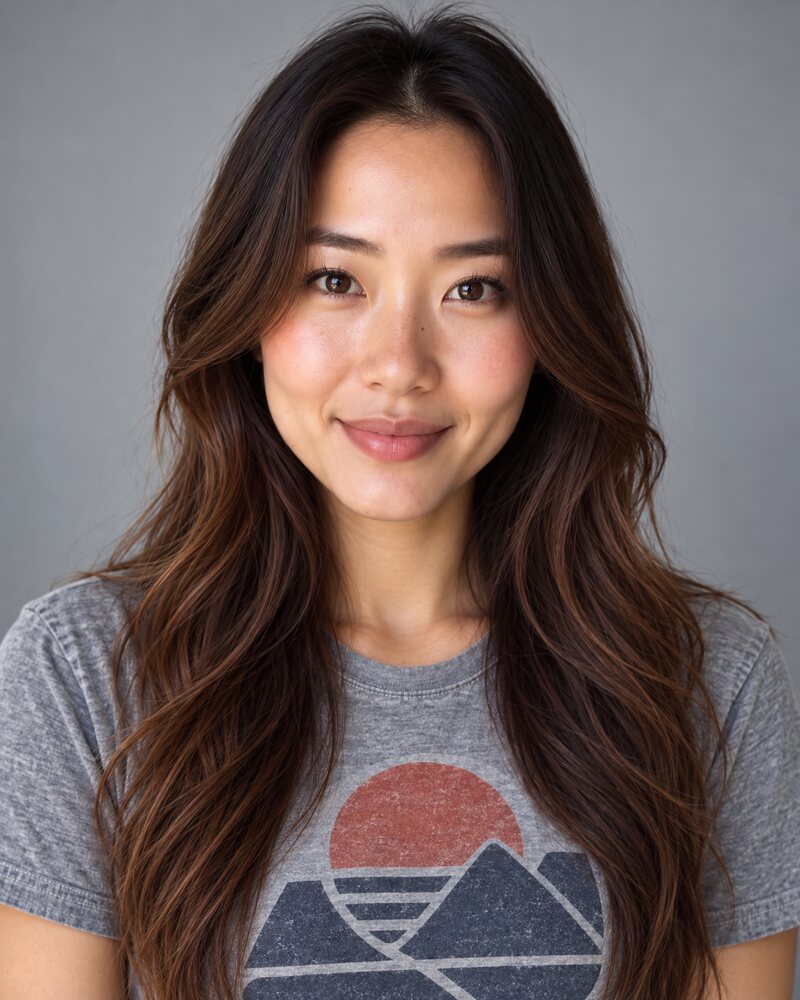 Example to avoid
Logo T-shirt
People read the chest before they look at the face.
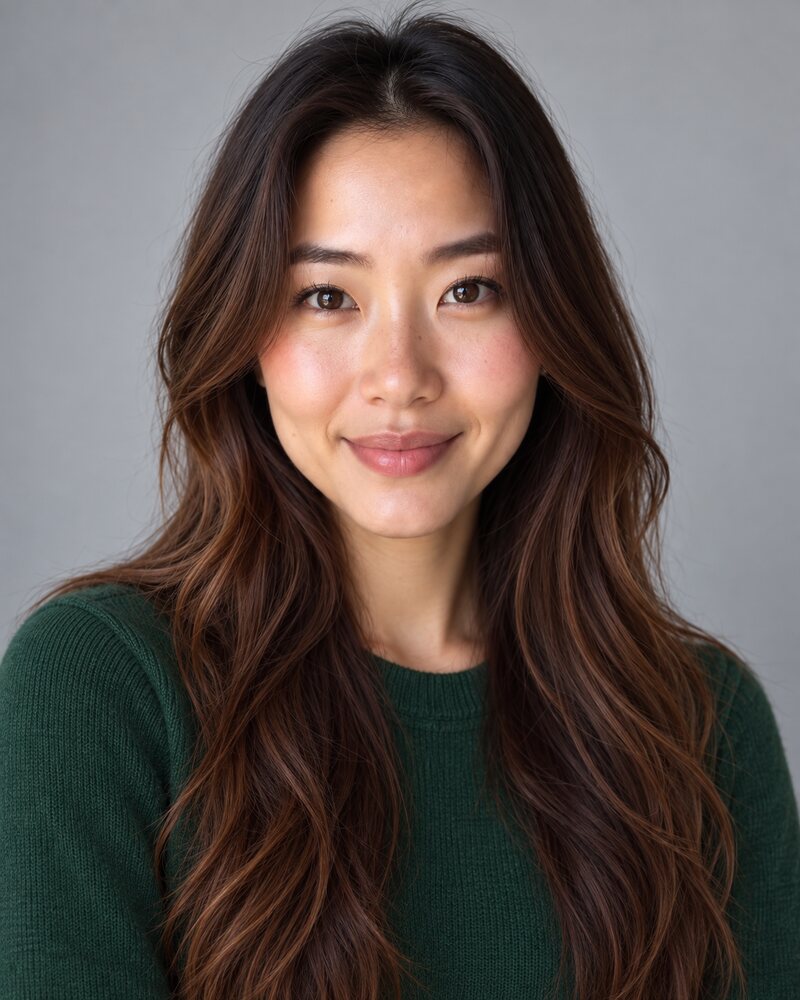 Good example
Plain and solid
Nothing to read, nothing to shimmer. The eye goes to the face.
- Logos and slogans. They date the photo and people try to read them. The exception is your own company's uniform, if the company asks for it.
- Shiny fabric. Satin and silk catch the light and create bright patches.
- Fabric that creases. Linen and thin cotton show every fold. Iron or steam the top and run a lint roller over dark jackets.
- Texture is fine. A fine knit, wool or matt cotton adds depth without adding a pattern.
Glasses, jewellery, hair and grooming
Glasses
If you wear glasses every day, wear them in the photo. People should recognise you. The problem to solve is glare. Clean the lenses, then tilt the frames down very slightly by lifting the arms a little above your ears. Raising the light or moving it to one side also helps, and so does an anti-reflective coating. Light-reactive lenses darken outdoors, so take the photo indoors or use another pair.
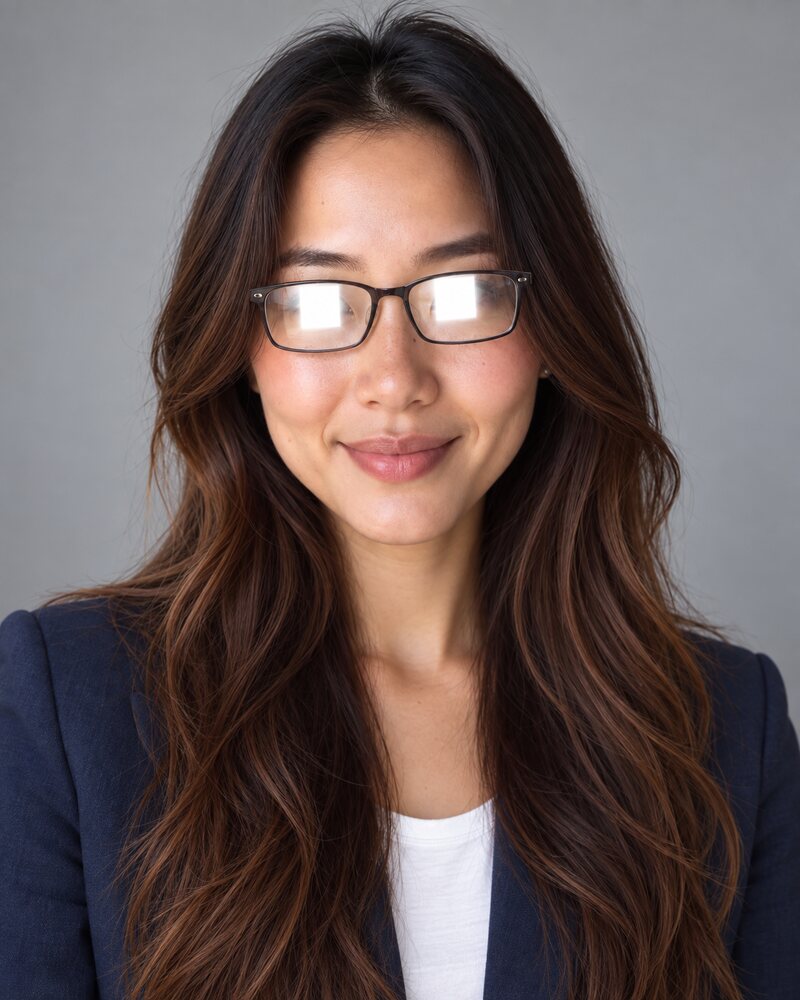 Example to avoid
Glare over the eyes
A light in front of the face reflects straight back off the lenses.
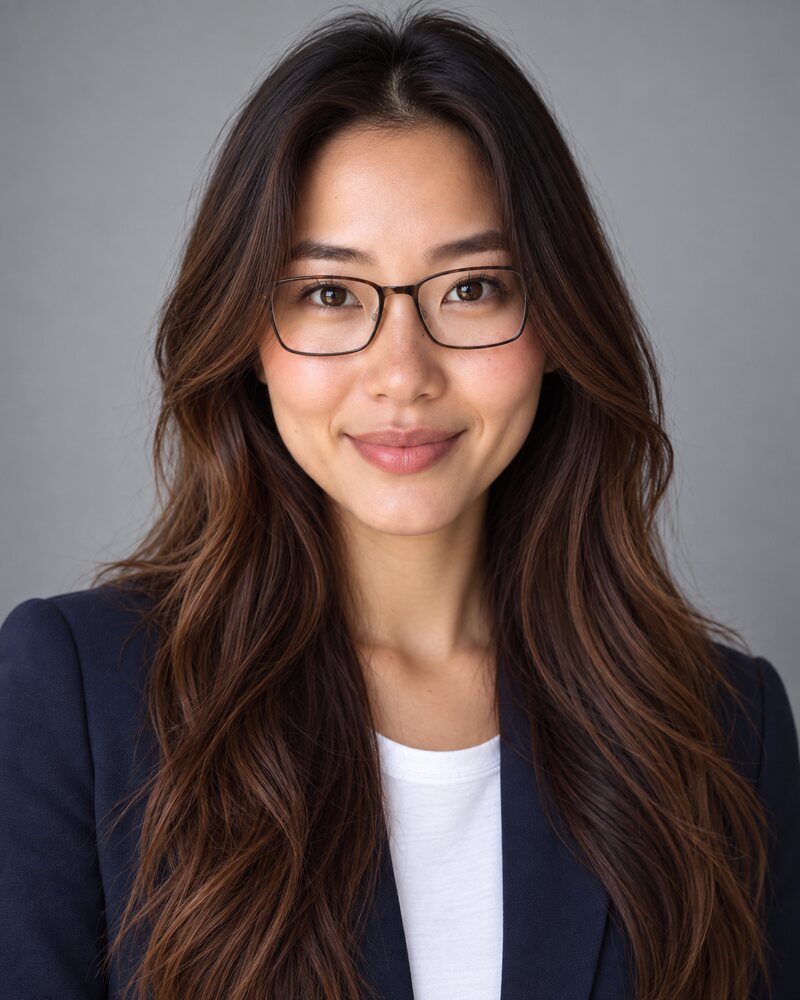 Good example
Lenses clear
Frames tilted down a touch and the light raised. Same glasses, clear eyes.
Jewellery
Small and matt beats large and shiny. Studs, a fine chain and a plain watch are fine. Anything that swings, sparkles or sits right at the neckline competes with your eyes.
Hair and grooming
Keep your usual style in its tidiest form. Get a haircut a few days before the photo, not the same morning, so it has time to settle. Facial hair works at any length if the edges are neat. Smooth down flyaway hairs, because they catch the light against a plain background. Shine on the forehead and nose shows under any light, so blot it. If you wear makeup, wear your normal amount with a matt finish. The aim is to look like yourself on a good day, and how you stand matters as much as any of this: see the headshot poses guide.
What to wear by industry
Dress codes differ, but one rule holds everywhere: go one step above your normal working day, in the colours your clients expect to see.
| Industry | What to wear | Background that suits it |
|---|---|---|
| Corporate and finance | Navy or charcoal suit jacket over a white or pale blue shirt. A tie only if you wear one to work. | Light or mid grey, or a softly blurred office. |
| Law | Dark suit, plain shirt or blouse, minimal jewellery. The most conservative version of your wardrobe. | Charcoal, mid grey, or bookshelves. |
| Tech and startups | Plain knit, open-collar shirt, or a blazer over a good plain T-shirt. No hoodie strings, no logos. | Light grey, a flat brand colour, or a blurred office. |
| Real estate | Blazer over a plain top in blue, cream or grey. What you would wear to a listing appointment. | A home exterior, a bright interior, or a leafy street. |
| Healthcare | White coat or clean plain scrubs for clinical roles. A blazer or plain knit in soft blue or green for everyone else. | White or light grey, or a bright clinic interior. |
| Creative | One strong colour or an interesting texture: deep green, rust, mustard, denim. Keep the shape simple. | A bold flat colour, a brick wall, or a city street. |
| Education | Blazer or cardigan over a shirt or plain knit, in a warm deep colour such as burgundy or forest green. | Bookshelves, a campus or park, or warm beige. |
If your job has a uniform that clients recognise, wear the real one. For worked examples, see the pages on corporate, executive, lawyer, doctor, teacher, real estate and LinkedIn headshots, or browse the headshot examples grouped by industry.
Headshot outfit ideas for men and for women
The rules above do not change with gender. What changes is which decisions you tend to face, so here are the common ones, shown on the same two people at four levels of formality.
Headshot outfits for men
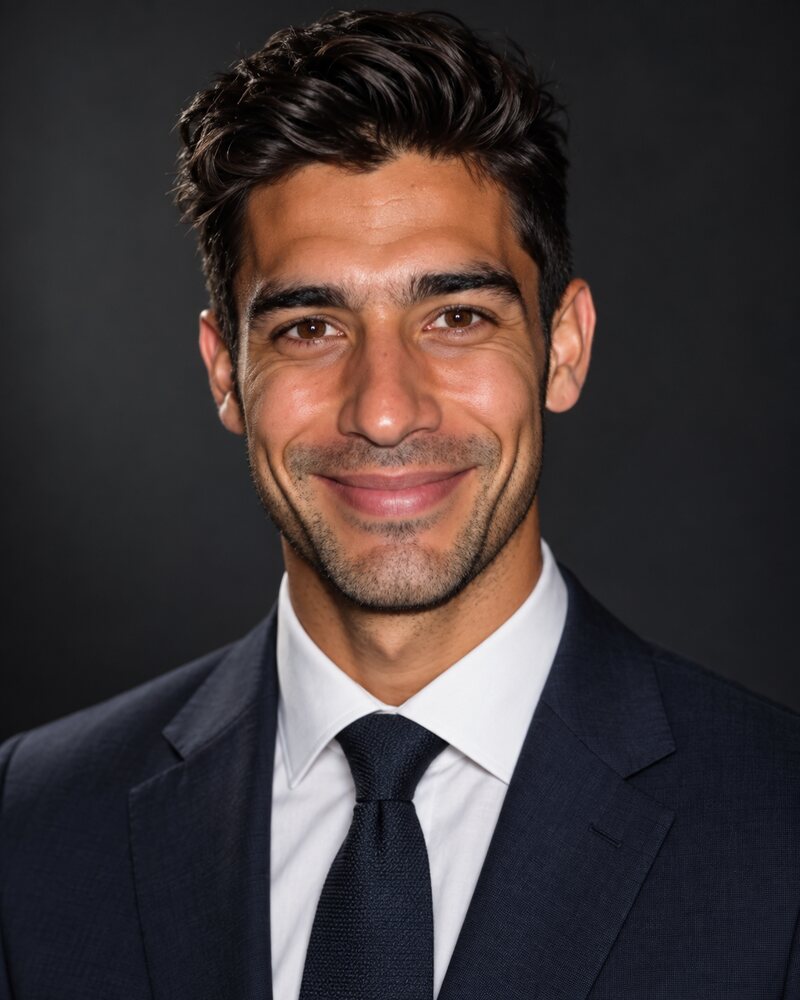
Suit and tie
Law, finance, leadership pages. Plain tie, knot tight and centred.
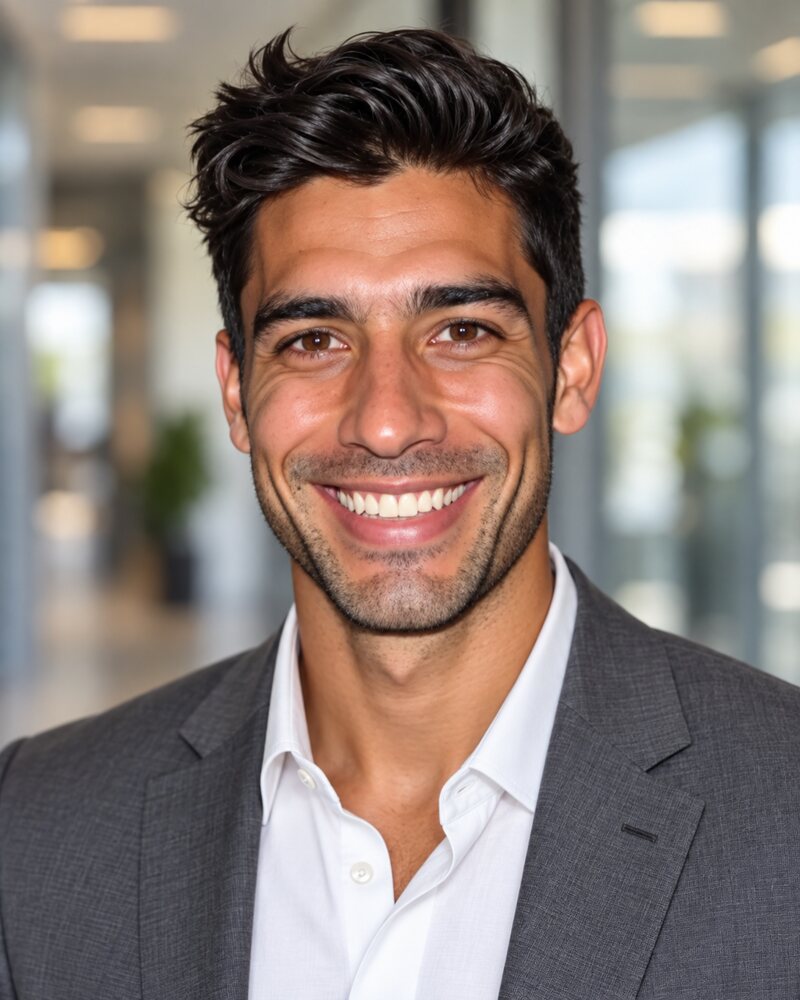
Blazer, open collar
The default for most offices. Smart without looking stiff.
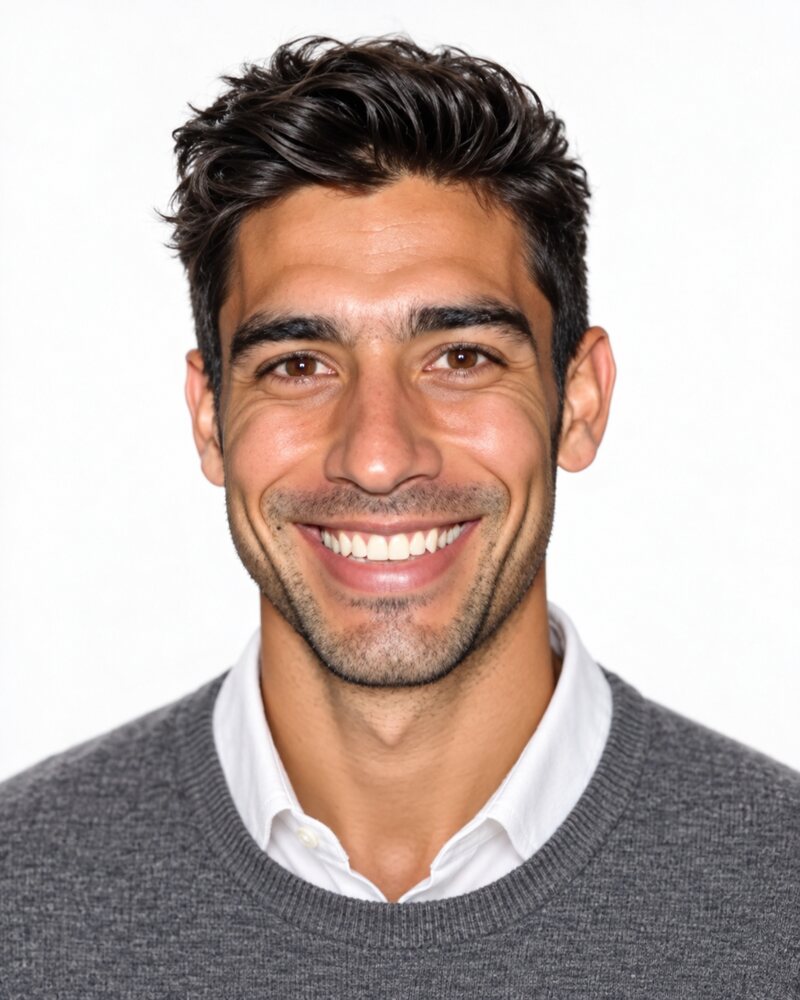
Knit over a collar
Smart without a jacket. The collar keeps it tidy.
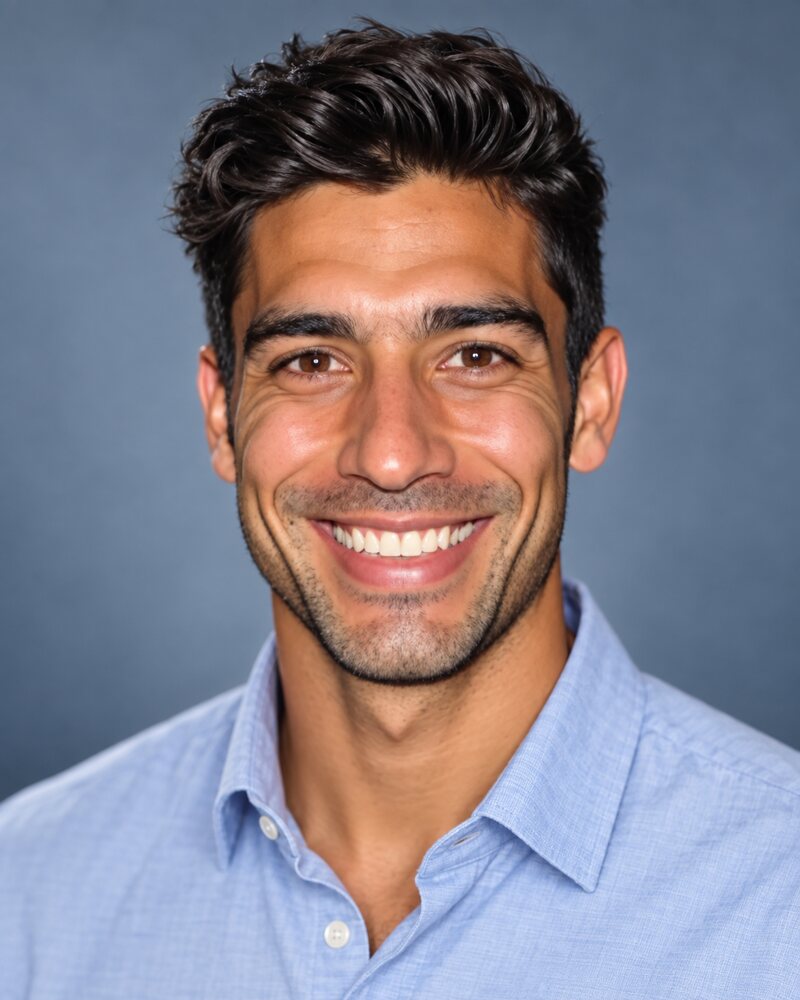
Shirt only
Fine in tech and startups. Nothing hides a crease, so iron it.
If you wear a tie, pick a plain or lightly textured one, tighten the knot and centre it. A crew-neck undershirt showing in an open collar is distracting, so wear a V-neck one or none. Check that the shirt collar still sits flat when the top button is undone.
Headshot outfits for women
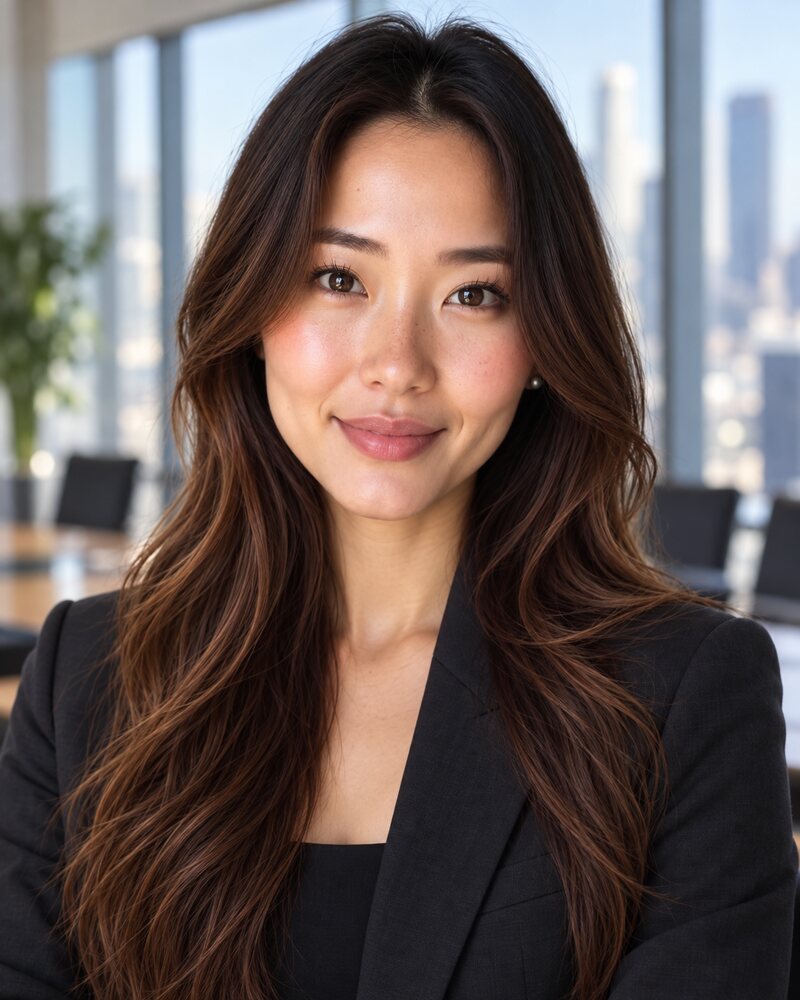
Dark blazer, dark top
Formal and quiet. The background has to supply the contrast.
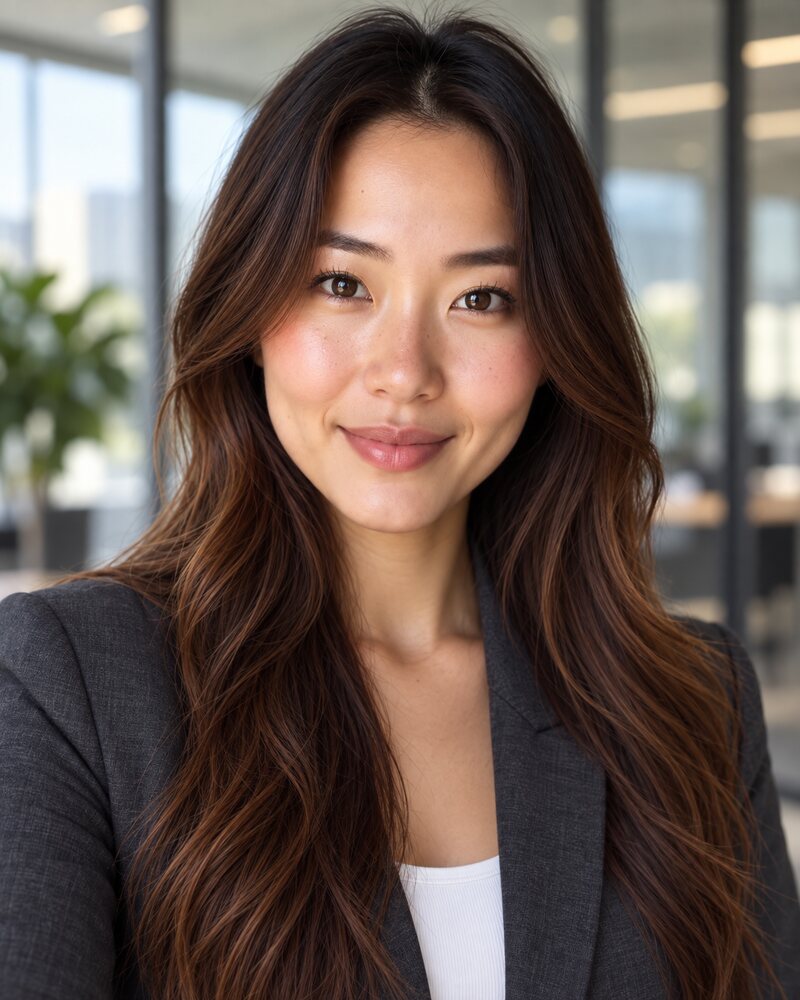
Charcoal blazer, light top
The all-purpose choice. The light top lifts the face.
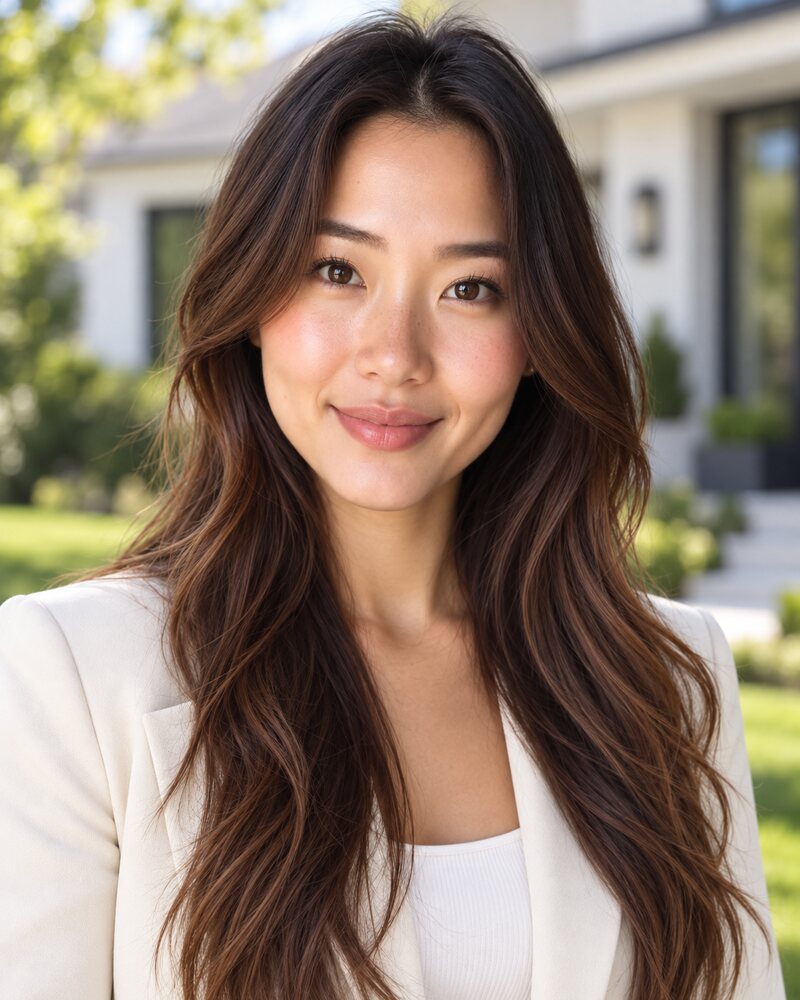
Light blazer
Warm and approachable. Needs a darker or greener background.
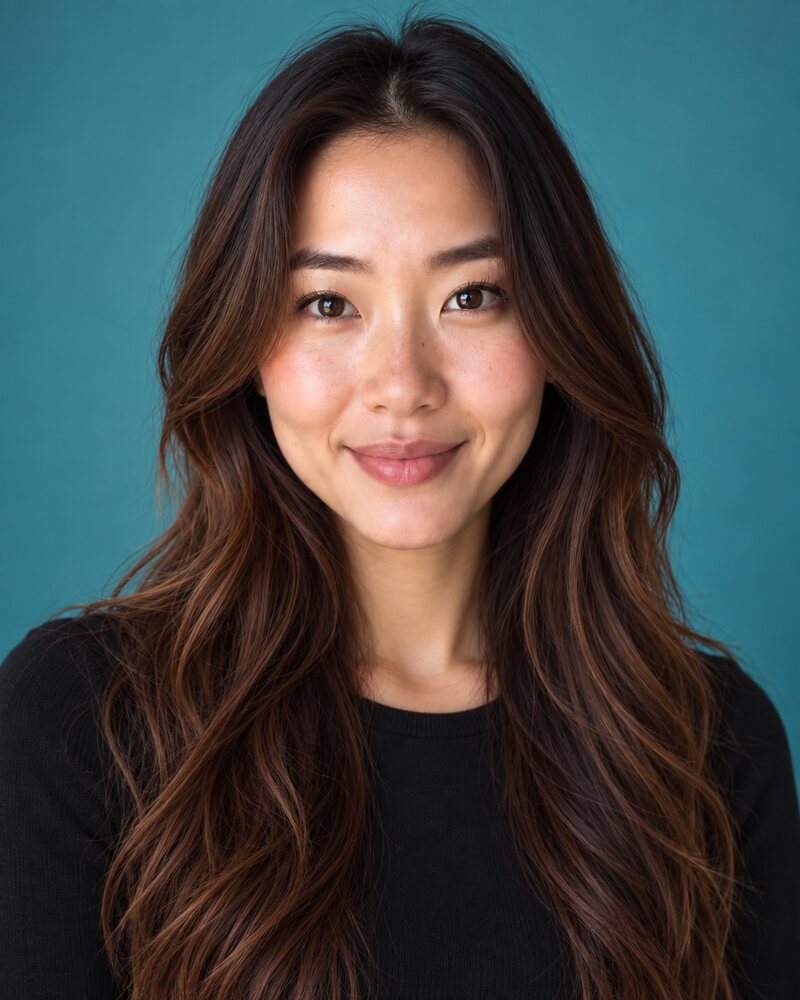
Plain knit
No jacket at all. A flat coloured backdrop keeps it sharp.
Sleeveless tops can crop to bare shoulders in a tight frame, so add a layer or choose sleeves. A blazer over a plain top is the simplest answer, and the top can be lighter or darker than the jacket depending on the background.
None of this is a rule about who wears what. A suit and tie, a soft blazer or a plain knit works on anyone. Choose the version you would wear to work.
What to bring to a shoot, and what changes with an AI headshot
For a session with a photographer, bring options. Capturely, a headshot company, advises bringing two or three outfits because colours and fabrics can look different on camera than in the mirror (read in October 2026). Ask your photographer how many changes the session includes, then pack:
- Two or three tops in different tones: one dark, one mid, one light.
- A jacket that fits, carried on a hanger and not worn in the car.
- A lint roller, a comb or brush, and blotting paper or powder.
- A lens cloth if you wear glasses, and a second tie if you wear one.
Try everything on a few days earlier, sitting down, next to a window. That is also most of the setup for taking your own headshot with a phone.
Or pick the outfit after the photo
Two limits are worth knowing. A generated outfit is not a garment you own, so choose one you would really wear, or the photo will not match the person who walks in. And if the photo has to show a real uniform, a name badge, embroidered scrubs or specific religious or cultural dress exactly as it is, a real photograph is the more reliable choice. You can browse the looks on offer in the styles library, or compare what each route costs in the headshot cost guide.